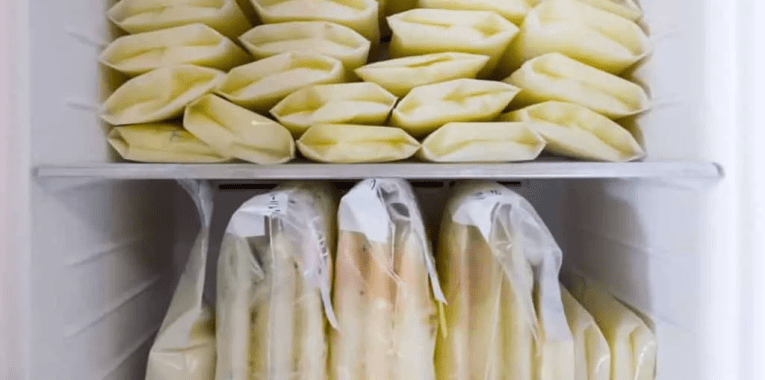
Breastfeeding – I’ve heard so many times that it’s one of the most natural things in the world, but let’s be real, it can be downright challenging, especially in those early days. I remember struggling with it with my first which you can read about here. After you get over the hump of it being new, it really does feel so natural and easy. But then pumping? Well, let’s just say it added a whole new layer to the mix! As I’m getting ready to do it all once again with my second, I’m definitely going to take a more relaxed approach. I was so obsessed about having a big freezer stash – to the point where it probably hindered my milk supply. All in all, it is worth the effort to have some milk on hand for just in case.
Whether you’re exclusively pumping, fitting in a session once a day, or just pumping occasionally, I hope these tips I’ve picked up along the way will make your pumping experience a bit smoother. They’re not in any particular order – just little nuggets of wisdom from one mom to another. No fancy initials after my name here, just a fellow mom sharing what she’s learned through trial and error : )
Before we get into pumping, let’s talk about the newborn days. During those first few weeks, your body is regulating your milk supply – you leak a ton! Why drench your nursing pads when you can collect all of that liquid gold? Now is the time to collect, not pump as that can trick your body into thinking you’ve got multiples, which can lead to engorgement and over production, which can lead to things like mastitis. So those first few weeks are for collecting! Unless of course your baby is having issues latching and pumping is recommended to you by your doctor, midwife, or IBCLC/LC. In this situation, not pumping would hinder your supply.
Once your milk comes in, there is usually a lot of it! So no need to waste – create your freezer stash. Even if you choose to never introduce a bottle, there are so many benefits to having breast milk on hand! You could add it to your baby’s bath if they have eczema, put it on a diaper rash, use it on baby acne or cradle cap. The possibilities are endless!
How to collect milk during the newborn days:
The easiest way I found to do this is by using the haakaa and the elvie catch. The haakaa is an active way of collecting milk because it uses suction. The elvie catch is a passive way of collecting milk because it doesn’t have suction. It’s best to use the haakaa once your baby has already nursed. I didn’t do this routine while I was out and about, but if I was at home or a friend’s house, I would. I did this for several months until I stopped leaking.
Here’s an example of what my routine would look like:
If my baby latched on my right side, I would use the elvie catch on the left side to collect the let down while she nursed. When she was done with the right and moved onto the left, I would then attach the haakaa on the right (the side she already nursed from) to collect (suction) that let down. With the elvie catch and haakaa combined, I would get several ounces per feed. It all adds up!
Why pump?
One of the reasons I started pumping was because I had the intent to go back to work. Then I decided not to, and then I went back once a week. I kept at it because I really liked the flexibility of knowing that I could be away from my baby for a few hours and she could take a bottle of my milk. Sometimes I needed some “me time,” a date night with my husband or work 9-5 once a week (If you’re a mama that will be going back to work, I highly recommend this book.) I developed a morning routine that I stuck with until she was about 7 or 8 months old and it helped me contribute to freezer stash I wanted.
The early morning hours are when your body makes the most amount of milk. During a typical nursing session, my baby would nurse on both sides. Since I was so engorged in the morning, she would only nurse on one side and be satisfied. Because I knew she would only eat on one side, I would use a haakaa on the opposite side to catch (suction) that let down. After she nursed, I would pump. I could easily get anywhere from 4-8oz from that morning routine!
Once she started sleeping through the night, I would pump after I put her to bed for the night (8/9pm) and before I went to bed (10/11pm.) That gave me a few more ounces. I only kept up this nightly pumping until she was about 4 or 5 months old.
Which pump should you choose?
When it comes to pumps, the Spectra reigns supreme in my opinion. Get the Spectra S1 over the S2 – the S1 comes with a battery pack, so you don’t need to be constantly plugged in, which is helpful if you don’t always have an outlet available to you. I’ve really liked the spectra! I tried using hands free pumps but I had a hard time centering my nipple and it just never worked for me. I also tried a manual hand pump and didn’t like that either. You just don’t know until you try!
Check out these instagrams for pump reviews and tips: @onewiththepump, @bemybreastfriend, @pump_mama_pump, @teachingmotherhood, @lalactation, @pumpedupmama and @themilknest.
Insurance Coverage
Take advantage of your insurance coverage for pumps. Most insurance plans cover the cost of a breast pump, along with supplies like storage bags and bottles. It’s a cost-effective option that can save you money in the long run. That’s how I got my spectra for free. Check out the website aeroflowbreastpumps.com.
Flange Fit Matters
Don’t settle for the standard flanges that come with your pump. Your average woman rarely fits the standard sizes! Seeing a lactation consultant or using resources like pumpables.com can help you find the right flange size for your body. You can also order a ruler on Amazon. Your size will fluctuate throughout your whole pumping/nursing journey. If you notice a drop in output, or are experiencing pain, it could be a sign that your flange size needs adjusting.
Lube it up
Before a pumping session, I would always use a coconut oil spray to help with any friction. Once that ran out, I just poured some olive oil in a mason jar and used that, haha! When I applied it directly on my skin, it made pumping comfortable and painless. Keep a burp cloth with you because it can get messy.
Pumping bras
I didn’t have great pumping bras and usually just held it in place with my hands. Possible but not ideal! This time around I plan on investing in nursing and pumping bras. I will report back and edit this blog post after I put them to the test! After much research, I decided to settle on these:
Kindred Bravely, Mom cozy and Bravado.
Breast milk storage bags
After trying several different brands, I found 2 that I really loved. The other brands always had issues with ripping and leaking.
My #1 brand is Kiinde. I really like how easy and simple the system is. They sell these screw top bags that you can freeze, thaw and feed your baby from. All in one – no more washing bottles! Only nipples. You can even pump directly into these bags if you want – I didn’t because my OCD wanted to know the exact ounces, haha! These bags never leaked. They are thicker than your average storage bag so I never had issues with them tearing. I highly recommend using these! The only thing I don’t like is that they don’t really freeze flat if you have more than 2oz in them. But it didn’t make it or break it for me because I have a deep freezer so I had the extra room. They have 3 different nipple flow sizes. I started with the slowest and never used the fastest.
I started giving my daughter 1 bottle every 2 days when she was about a month old. I pumped while my husband fed her and it was a great opportunity for them to bond. She never had any nipple confusion. By the time I was away from her for feeding(s) she was about 3 months old and took the bottle no problem!
My #2 brand is Nanobebe. If you choose to not use the Kiinde system for bottle feeding but just want some milk in your freezer, these are the bags to use. They look and function like a ziplock bag but are a thicker material than your average storage bag. I never had any issues with leaks or rips. They are so easy to store because they freeze flat!
My routine for bagging milk:
I had plenty of storage bottles thanks to my insurance! After collecting or pumping, I would put that milk in a storage bottle and into the fridge. Once that milk was cold, I would pour it into a mason jar that I kept in the fridge. I would continue that all day, never mixing the warm milk with cold milk. Every 2 days I would bag the milk to freeze. I did this so I wasn’t constantly filling bags all day. I froze them in 2oz and 3oz bags. As she got older and drank more, I would then freeze in 4oz, 5oz, and 6oz bags.
Tips for pumping away from your baby:
Because breastfeeding is such an emotional, mental, and natural thing, pumping tends to make it not that way. Here are some tips to get a good pump in while you’re away from your baby.
The Sock hack
While pumping, I always wanted to watch and see how much my output was. I wish I would have known this hack. Placing a baby sock over each bottle while you’re pumping can help you avoid staring at your output constantly, which can play tricks on your mind and cause unnecessary stress. All of these things can lower your output. So put those socks on and look at pictures and videos of your baby instead. Let that oxytocin flow!
Stay Connected
Plan to bring along some of their clothes or blankets – it can be comforting. Having something with their scent nearby can help regulate your hormones and make the pumping experience a bit easier which will help with your output.
Cleaning pump parts multiple times a day
If you’re pumping several times a day there are a few hacks to make clean up easier on you. If you’re on the go, get a pack of wipes like these to clean parts in between sessions. If you have a fridge available to you, put your parts in a ziplock bag and store them in the fridge until your next session. The only downside to that is that cold doesn’t help with milk production – you might want to invest in some heated vibrators. I got these and really liked them. I’m typically cold, so these helped warm me up during a session.
If you’ve made it this far, you can see that there is so much to pumping! It may not always be easy, but with the right knowledge and support, it can be a rewarding experience. I definitely think it’s worth the effort, which is why I plan to do it again this time around. It looks different for everyone, so there isn’t one way to do it – customize it to how you want it to be! I hope these tips and tricks can help you navigate the world of pumping with confidence and ease. Happy pumping!
Until next time ❤

 a simpler vida